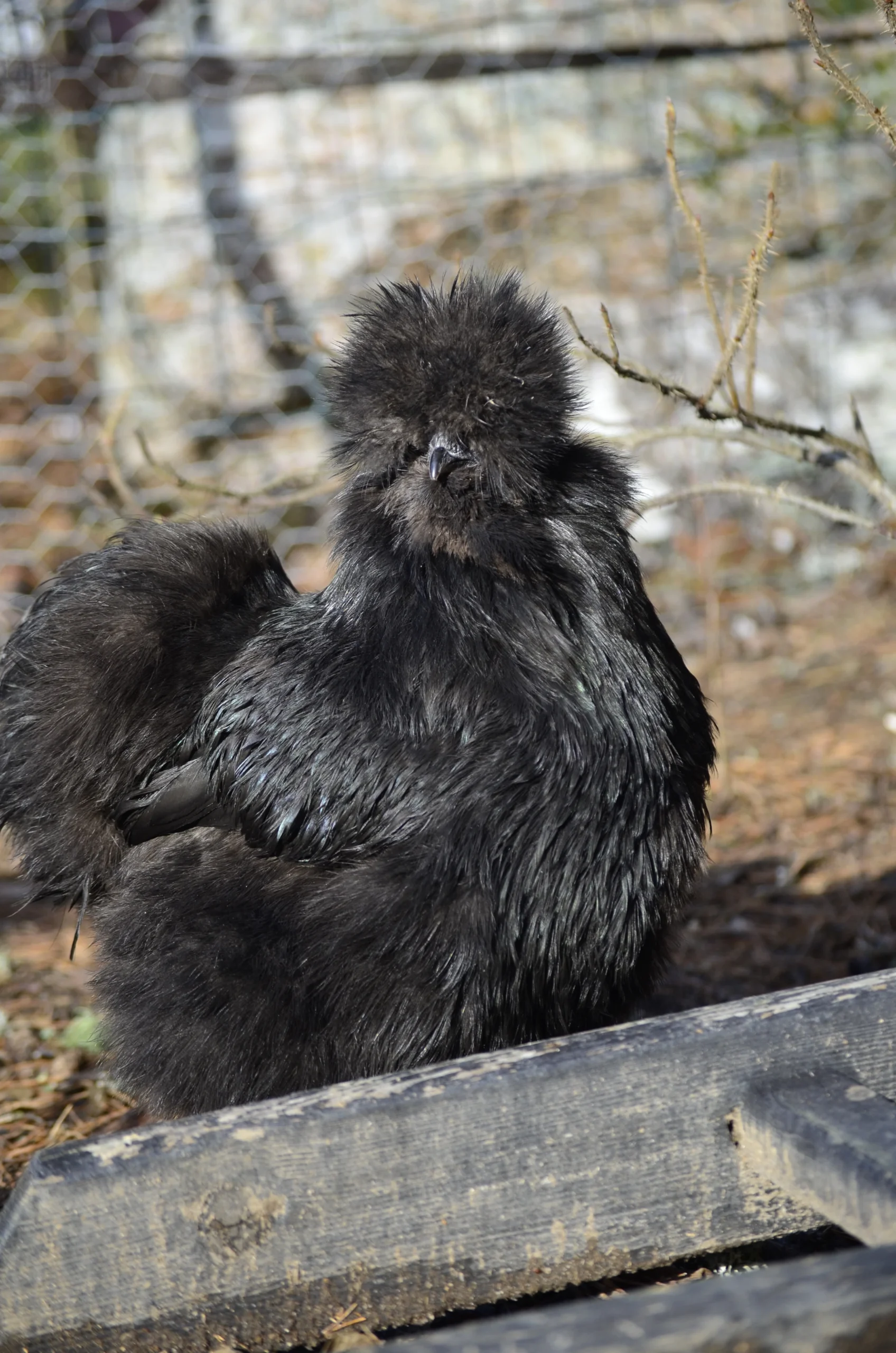
SOUR CROP E. coli infection
Professor Ratigan “Poppi”,
Silkie hen, 3 years old
In the end, it was her own body that destroyed her. It began as a classic case of sour crop and was treated as such for a long time, without ever improving. During the first test, she was negative for infection, but we later discovered that this had been a false negative result. Her body had formed barriers around the infection, abscesses began developing throughout her body, and one of them was located directly in her esophagus. Despite receiving the appropriate antibiotics, the infection did not respond to treatment. Because the infection was surrounded by these barriers, the antibiotics were unable to work effectively.
The infection spread rapidly during her final seven days, making it increasingly difficult for her to breathe. Despite everything, she was still free-ranging and appeared healthy on the outside. When we finally saw the X-ray, we knew that she would only continue to decline. We could have waited until the end came naturally, but ultimately, we chose to let her pass peacefully and with dignity.
Poppi had never laid a normal egg. She had Suprelorin implants for most of her life. This makes me wonder whether there was already something affecting her body from the beginning—something that weakened her immune system and made her particularly vulnerable to this infection.
2021/07/04 – 2024/09 /25