MUTATIONS & DEFECTS vaulted skull and crested ducks
Unfortunately, the traits we consider beautiful or desirable in a breed are sometimes prioritised without sufficient regard for the health problems that may accompany them.
The world of poultry is no exception. Breeds such as Silkies, Dutch White-Crested chickens and Polish chickens all share one distinctive feature: their characteristic crests. However, these crests can be associated with a condition known as a vaulted skull.
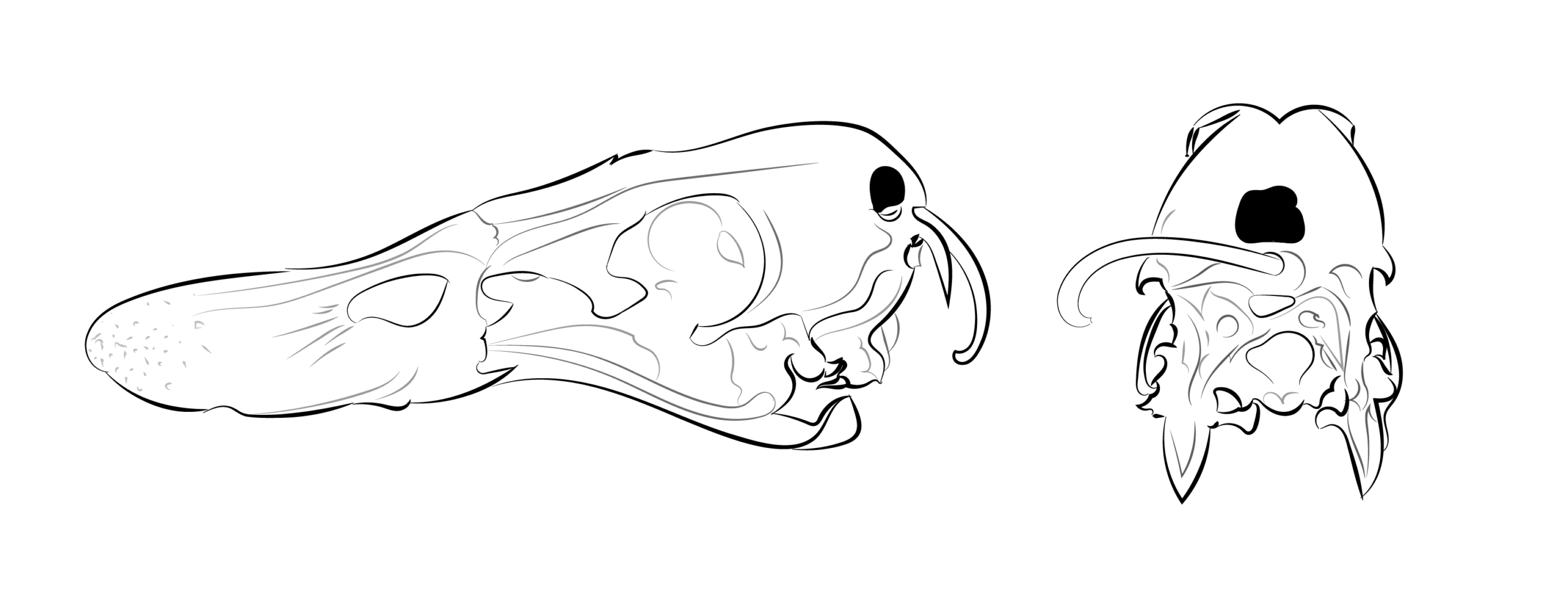
A vaulted skull is a type of genetic mutation that causes the skull to develop a raised, dome-like area on top of the head. As a result, openings may also form in the skull, leaving parts of the brain protected by only a thin layer of skin.
The purpose of the skull is to protect the brain. When these openings are present, it can no longer provide the same level of protection.
Not every peck or blow to the head will be fatal. However, these openings make the chicken significantly more vulnerable to neurological injury, brain swelling and, in some cases, even sudden death.
If swelling occurs, brain tissue may be forced through the openings in the malformed skull. This is highly likely to cause brain damage and may lead to neurological symptoms such as wry neck.
Vaulted skulls have never been observed in non-crested breeds.

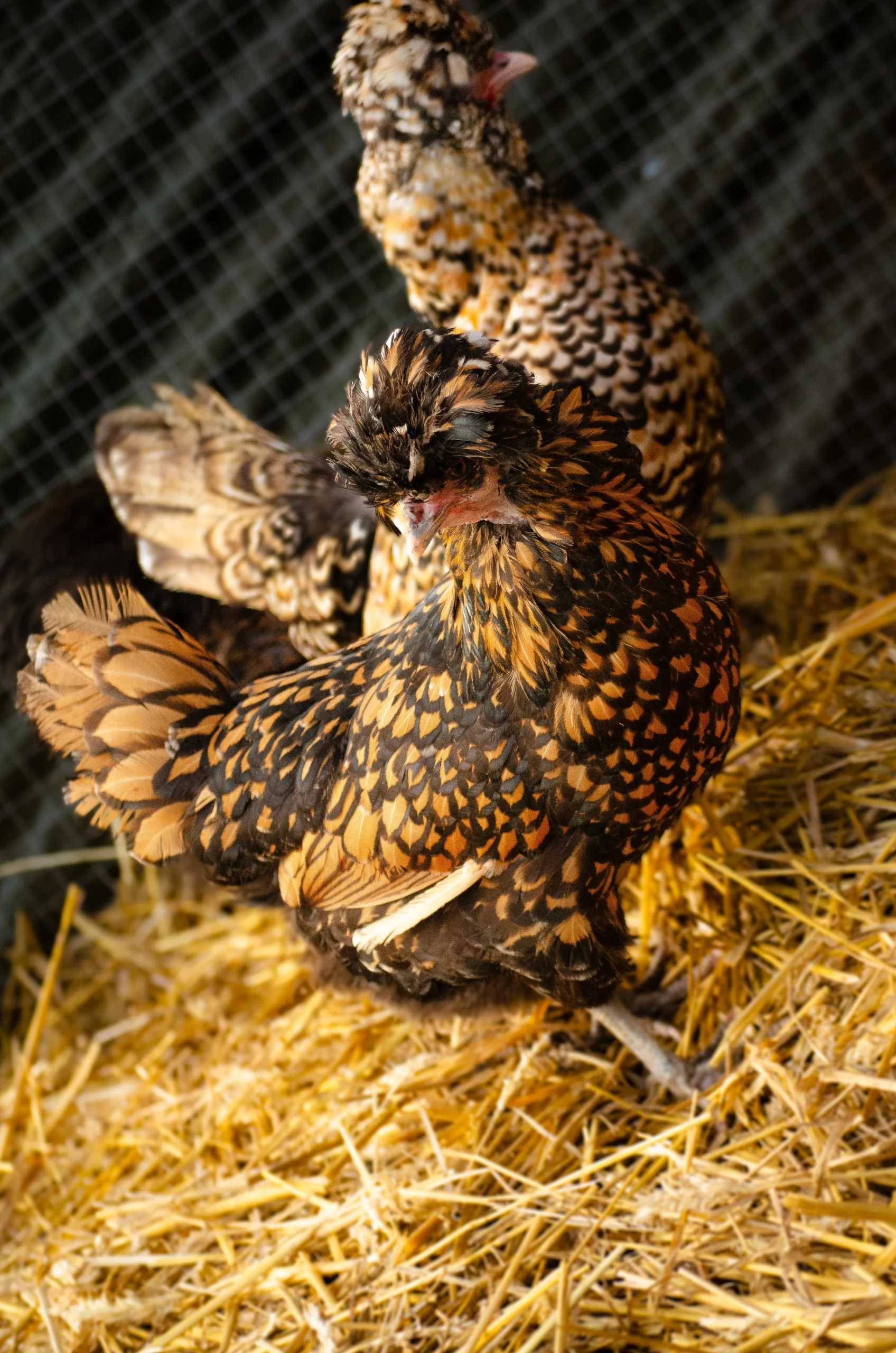
Determining whether a chicken has a vaulted skull is usually easiest when it is still a chick. The rounded shape of the head is not caused solely by an abundance of fluff, but also by the shape of the skull itself. The chick may also appear to have a band encircling the base of its crest.
In an adult Silkie, a vaulted skull can sometimes be detected by wetting the feathers—for example, during a bath. Once the fluff lies flat, the shape of the skull becomes more visible.
Vaulted skulls are more common in Polish and Dutch White-Crested chickens. Research has also indicated that these birds may have somewhat reduced cognitive abilities, which is thought to be related to part of the brain being displaced into the raised area of the skull.
Polish and Dutch White-Crested chickens have been selectively bred for this trait for a long time. Some studies therefore suggest that these breeds may have developed a degree of resilience despite the mutation. In Silkies, however, the mutation is relatively recent, which may make them more vulnerable.
Based on the available evidence, it is also possible to speculate that selective breeding in Silkies has further exaggerated this trait, potentially making them even more susceptible to injury.
Vaulted skull has been documented in chickens since the early 20th century. Despite the mutation having been recognised for so long, its exact genetic cause has yet to be established.
Historically, American Silkies were crossed with Polish chickens to introduce the vaulted-skull trait. But why would anyone deliberately introduce such a mutation into an otherwise healthy bird? The answer lies in appearance. A more prominently domed skull supports a larger, fuller crest, which was considered more aesthetically desirable.
However, selective breeding has caused the mutation to become more extreme in some birds. There have been reports of chicks hatching with severely malformed skulls, including cases in which parts of the upper skull are missing.
As previously described, the severity of a vaulted skull can vary considerably. Many Silkies with a vault can live normal lives, but it is important to remember that they may be more vulnerable to injury. For this reason, many breeders choose to euthanise chicks with an obvious vault shortly after hatching, particularly when the deformity is severe.
I took in a hen from a breeder who had a small vault. The breeder chose to give her a chance at life, but recommended that she should never be used for breeding.
Based on my own observations, I have also noticed a possible link between wry neck and vaulted skull. My own hen with a vault has experienced this symptom, and I have heard of several similar cases. However, it is difficult to determine whether this reflects a genuine association or is merely coincidental.
Vaulted skull has also been associated with reduced hatchability, early chick mortality and, in some cases, damage to the optic nerve.

Crested Ducks
I also want to include crested ducks in this article, as they are closely associated with a mutation similar to vaulted skull.
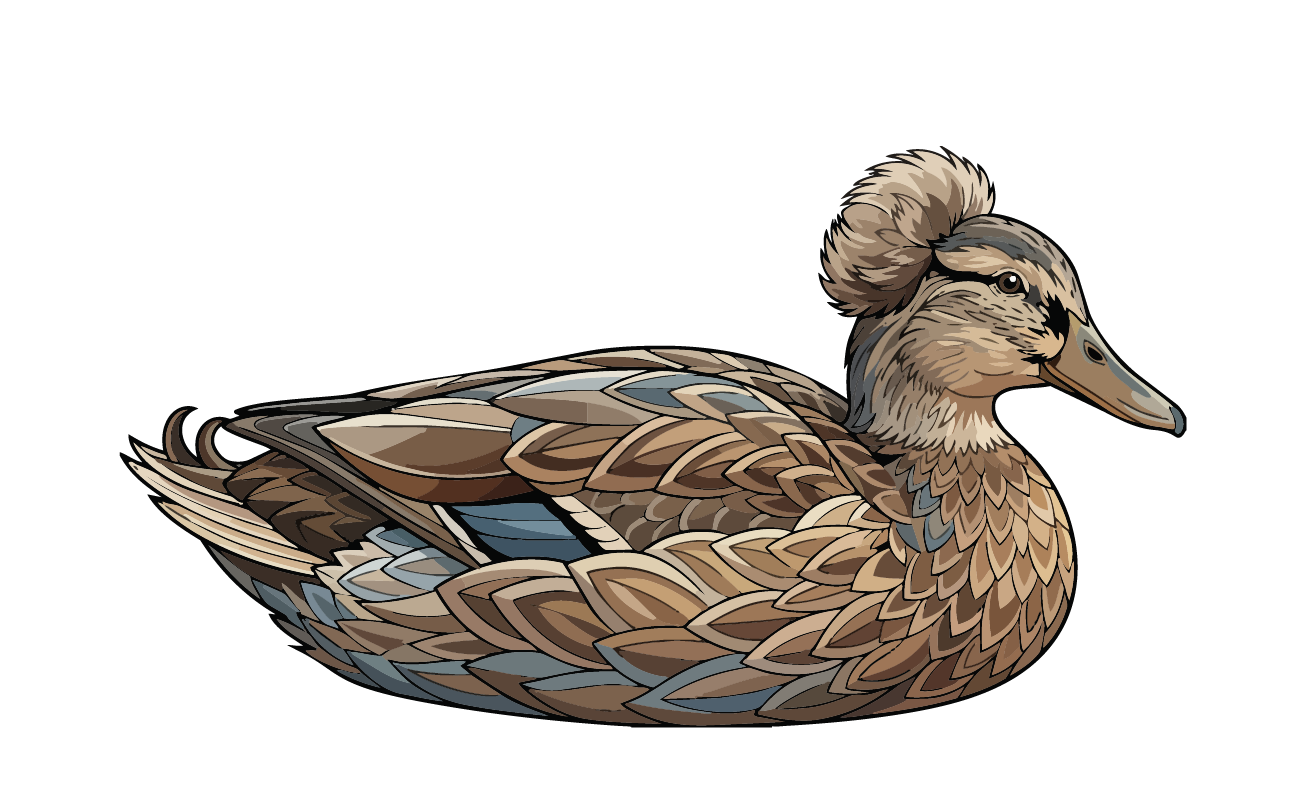
Crested ducks are characterised by a tuft of feathers on top of the head, which can sometimes grow so large that it resembles a small “afro”. Many people consider this feature cute or charming, almost as though the duck has its own hairstyle. As with vaulted skulls in chickens, this appearance has encouraged continued selective breeding despite the health problems associated with the mutation.
The crested trait is caused by a mutation expressed in heterozygous birds. During embryonic development, an opening forms in the skull. Fatty tissue protrudes through this opening, and feathers grow from it, creating the duck’s characteristic crest.
However, this mutation can cause several health problems. One common issue is an abnormal gait, which can make affected ducks prone to losing their balance, falling onto their backs and struggling to get up again. As with vaulted skulls, the mutation has also been associated with neurological problems, seizures and, in some cases, sudden death.
When keeping crested ducks, it is generally advisable to have more females than males. Otherwise, the females may be subjected to excessive force and restraint during mating.
Furthermore, when two crested ducks carrying the mutation are bred together, a proportion of their offspring inherit two copies of the mutated gene. This combination is often lethal, causing the embryos to die inside the egg before hatching.
