
I always knew that the condition crossbeak existed, but it never truly caught my attention until I watched the YouTuber Oak Abode talk about how a crossbeaked bird can actually be beneficial to a flock. Ever since watching that video, I have always had it in the back of my mind that I wanted to add a crossbeaked bird to my own flock.
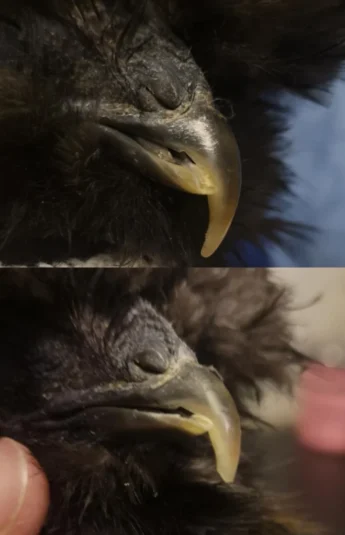
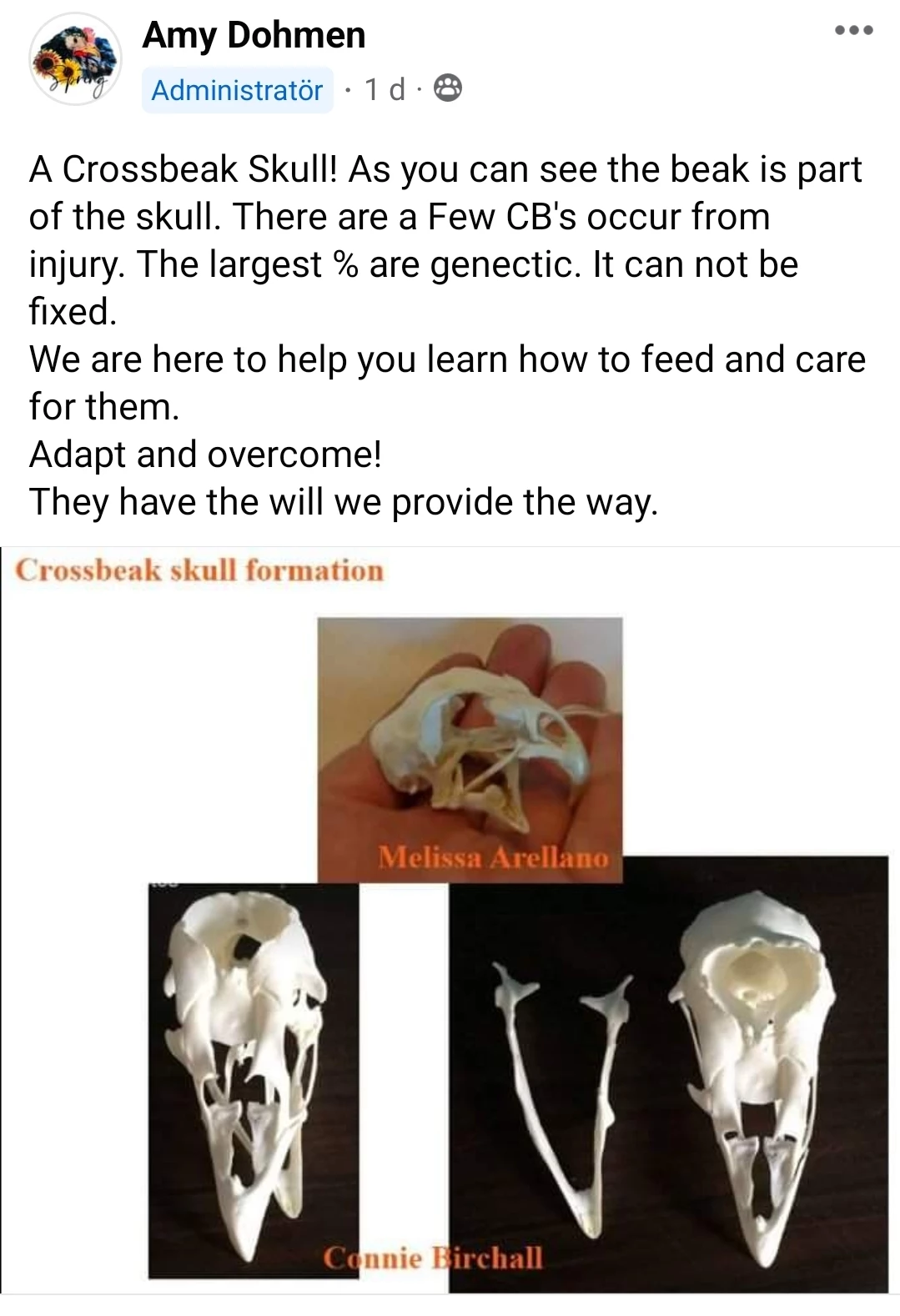
Crossbeak is a condition where the upper and lower parts of a bird’s beak are not properly aligned. It is most commonly seen in chickens but can also occur in ducks and geese.
The condition may be visible at hatching, but it often becomes more noticeable as the bird grows. There can be several underlying causes. Genetics is considered the most common cause, but it may also develop due to improper positioning inside the egg, poor incubation conditions, injuries, or nutritional deficiencies.
Can they have a good quality of life?
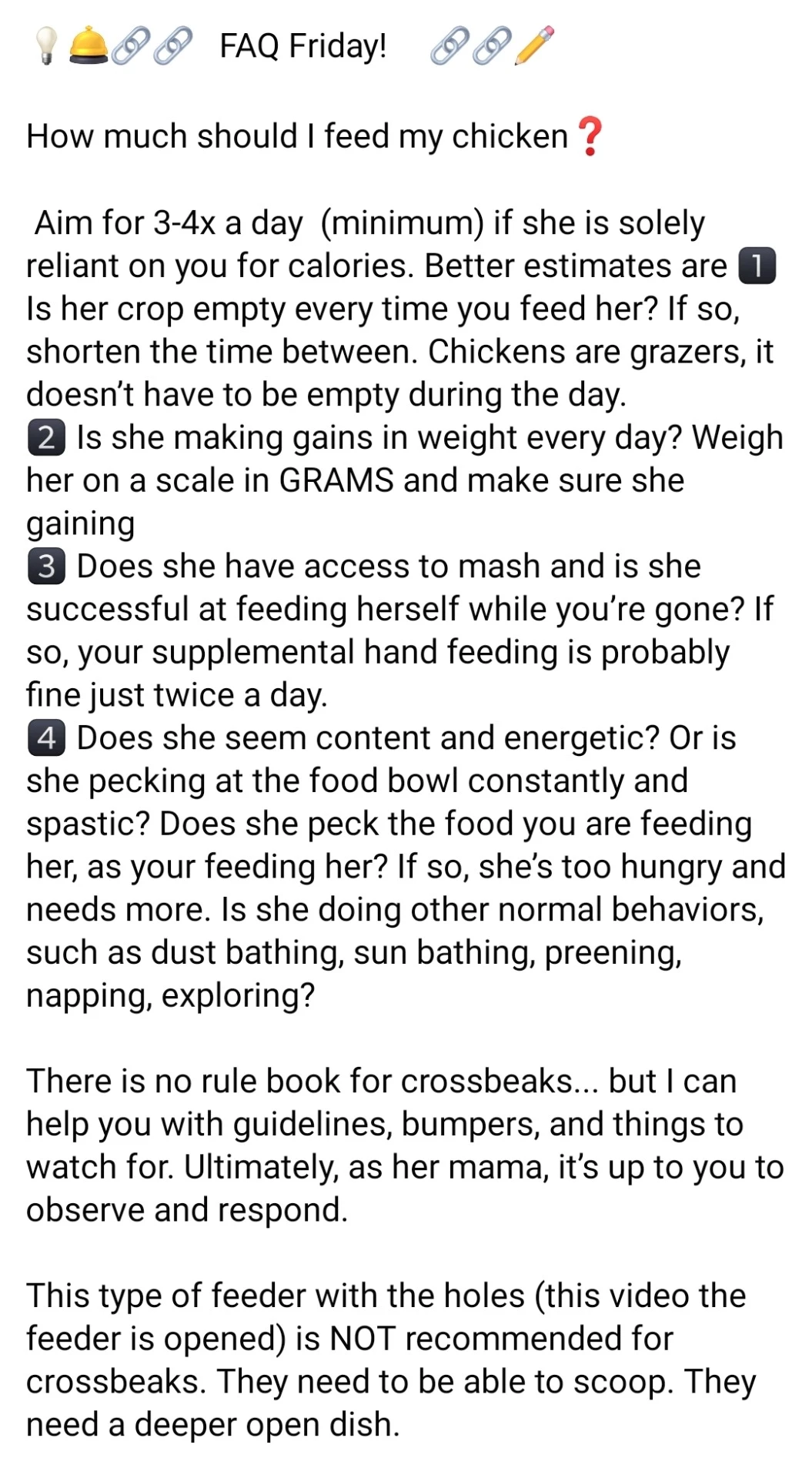
A crossbeaked bird can live a happy and fulfilling life, but it does require some additional care. You need to make sure the bird is able to eat and drink enough. Deep food dishes can make feeding easier, but you can also offer wet feed or mash, which is often easier for them to pick up. A good routine is to weigh the bird weekly to ensure it is consuming enough food.
Unfortunately, the statistics cannot be ignored: crossbeaked birds do often have shorter lifespans. They may have additional underlying health issues that are not always visible, and the condition itself may also affect their immune system.
Taking in a crossbeaked bird often means opening your heart to the possibility of loss. However, remember that you are still giving that little bird love, care, and a chance at a good life—even if its time may be shorter. Many people have raised crossbeaked birds that live to an old age; the oldest one I have personally seen lived to be 16 years old.
Torpedo feeding
The severity of crossbeak varies from bird to bird. In more severe cases, the bird may need assistance with eating. One method that can be used is called “torpedo feeding.”
This involves forming a firm “pellet” or “cake” of feed that is gently placed into the bird’s beak, making it easier for the bird to consume.
Tube feeding
If torpedo feeding does not work for your bird, tube feeding may be an alternative. Do not attempt tube feeding if you lack experience. It is strongly recommended that you seek guidance from a veterinarian or an experienced poultry keeper to learn the correct technique.


My thoughts on crossbeaks
Since I first wrote this article, two crossbeaked birds have passed through my life, and a new one has actually joined my flock.
The reason I strongly advocate for crossbeaked birds is that people need to take responsibility for the defects we contribute to creating. We often blame genetics as the cause, but the truth is that crossbeak is more likely to be related to incorrect humidity and temperature during incubation in many cases.
I have had two crossbeaked birds close to me who lost their lives, as their ability to cope was already compromised by the challenges associated with their condition.
As Oak Abode explains in her video, crossbeaked birds can actually be beneficial to a flock (watch the video to learn why!). I get the feeling that many people simply do not know about this condition and are therefore surprised when one of their birds begins developing a crossbeak.
The crossbeaks who have come into my life
Shenzi
Shenzi came into my life after a woman in my town hatched some of my birds. When she sent me pictures and asked about the crooked beak, I immediately knew that I wanted this bird. She stayed in quarantine at my neighbor and friend’s home, and the two of them quickly became attached to each other.
After 30 days, we went to the veterinarian for an infectious disease panel to be completely certain. The results showed that she was positive for an ongoing infection, despite showing no clinical signs. The veterinarian advised against introducing her into my flock due to the risk of transmission.
My friend, who had cared for her throughout quarantine, had become so attached to Shenzi that he said:
“She is part of our family here now.”
Shenzi now lives only one house away, and I have had the privilege of watching her grow up. She has also been a mother twice (not biologically). Two and a half years later, she is still alive, and it remains unclear whether she is still positive for any infection. She has her own flock and has not infected any other individuals.
Panic
I found Panic through a Facebook group. I have always been cautious about buying birds from private individuals, but I decided to follow the same quarantine and testing protocol that I had used with Shenzi.
Unfortunately, we only had a few months together. He crowed for the first time, but shortly afterward he became ill. He had severe health issues throughout his body, likely due to poor breeding practices. He had scoliosis, crooked toes, crossbeak, and an extremely vaulted skull, which led to wry neck. Despite all of these challenges, it was an aspergillosis infection that ultimately meant he had to be put to sleep. His scoliosis also increased the risk of paralysis.
Shan-Yu
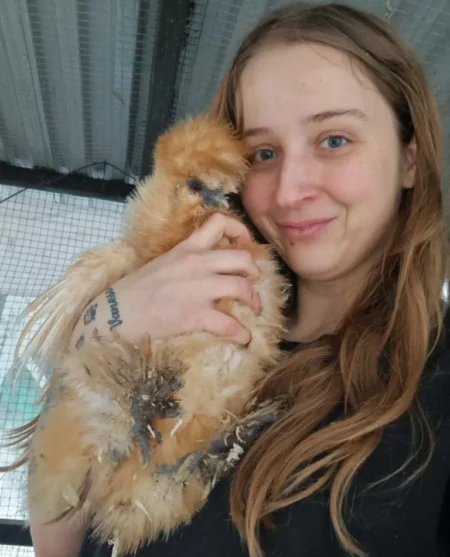
At the end of 2025, I planned to add more birds to my flock. I had actually been considering another pair, but the first bird I noticed was a small frizzled buff-colored girl with a slight indication of crossbeak.
After losing Panic, I never thought I would bring another crossbeaked bird into my life. Yet here she is today—and just a few weeks ago, she laid her first egg!
Without the experiences I gained from Shenzi and Panic, I would never have Shan-Yu today.